


Call us now
08037103723

 Send Inquiry
Timber Cooling Tower
Price 50000 INR/ Unit
Timber Cooling Tower Specification
- Material
- Metal
- Application
- Industrial
- Condition
- New
- Height
- 60 Millimeter (mm)
- Product Type
- Timber Cooling Tower
- Voltage
- 220-480 Volt (v)
- Weight
- 550 Kilograms (kg)
- Color
- Black
- Length
- 120 Foot (ft)
Timber Cooling Tower Trade Information
- Minimum Order Quantity
- 1 Unit
- Payment Terms
- Cash in Advance (CID), Cash Advance (CA), Cheque
- Supply Ability
- 1 Unit Per Month
- Delivery Time
- 3-4 Week
- Main Domestic Market
- Gujarat
About Timber Cooling Tower
A cooling tower that was built primarily with wood or lumber is known as a "timber cooling tower." Due to the accessibility of wood and its advantageous construction qualities, timber cooling towers were frequently utilised in the past. However, due to worries about their longevity, upkeep, and environmental effects, their use has decreased over time.
The main characteristics and elements of a wooden cooling tower are as follows:
1. Timber Structure: The cooling tower's framework and supporting components are made of wood or timber. Usually, treated wood is used to increase resistance to damage from moisture, rot, and insects. The components of the cooling tower are supported and given strength by the timber construction.
2. Cooling towers use fill media to expand the amount of surface area available for heat transmission. Wood slats, wooden laths, or PVC sheets are examples of materials that can be used as the fill media in timber cooling towers. The fill material makes it easier for heat to transfer from the water to the surrounding air.
3. Timber cooling towers have fans or blowers installed to let the air move more easily through the tower. The fans generate airflow that helps the water inside the cooling tower evaporate by effectively eliminating heat from the water.
4. Water Distribution System: To distribute water over the fill media uniformly, timber cooling towers use a water distribution system made up of pipes, nozzles, and sprayers. This guarantees enough soaking and maximises water and air contact for effective cooling.
Timber cooling towers have the following benefits:
1. Aesthetics: Timber cooling towers can be visually appealing, especially in rural or natural locations.
2. Natural Insulation: Wood naturally insulates, which can assist the cooling tower be less affected by changes in outside temperature.
Timber cooling towers do, however, have a few disadvantages:
1. Durability and Maintenance: Over time, decay, rot, and insect damage can affect timber constructions. The cooling tower needs regular maintenance, which includes treating the wood and taking care of any damage.
2. Environmental Impact: The use of wood in the construction of cooling towers raises questions about deforestation, sustainability, and the possibility of chemical treatments to prevent decay and insect damage.
3. Fire Risk: Compared to non-combustible materials like steel or concrete, cooling towers made of wood are more prone to fire.
Advanced Cooling Technology
Our Timber Cooling Tower utilizes superior engineering to provide stable and energy-efficient cooling for industrial processes. Its metal construction and high-capacity design make it ideal for handling demanding workloads in large-scale facilities.
Exceptional Durability and Build
With a combination of robust materials and precise manufacturing, this cooling tower offers resistance to corrosion and environmental stresses. The black finish not only adds to its aesthetic appeal but also enhances its durability.
Reliable Industrial Application
Perfectly suited for industries requiring efficient heat exchange solutions, this tower is widely used in factories, processing plants, and power generation sectors across India. It is engineered to easily integrate into existing systems for immediate operational benefits.
FAQ's of Timber Cooling Tower:
Q: How is the Timber Cooling Tower installed in an industrial setting?
A: The Timber Cooling Tower is typically installed on a level surface with adequate structural support. Professional technicians ensure secure connections to water and electrical systems using the 220-480 V input, verifying stable operation and safety compliance.Q: What are the primary benefits of using this cooling tower in industrial applications?
A: This cooling tower delivers high efficiency in temperature regulation, leading to enhanced equipment lifespan and reduced energy costs. Its robust metal construction ensures durability, while the 120-foot length accommodates large-scale cooling requirements.Q: When should maintenance procedures be performed on this cooling tower?
A: Regular inspections and routine maintenance are recommended every six months to ensure optimal performance and longevity. Immediate maintenance should be conducted following any operational irregularities or performance drops.Q: Where is the Timber Cooling Tower commonly used in India?
A: The cooling tower is widely utilized in industrial environments across India, such as manufacturing plants, energy facilities, and large-scale processing units, where effective heat dissipation is crucial for operational efficiency.Q: What is the process involved in operating this cooling tower?
A: Operation involves circulating water through the tower, where the heat is removed via direct contact with air, allowing cooled water to be recirculated into industrial systems. The metal structure and optimized design ensure effective thermal exchange.Q: How does the 220-480 Volt voltage range enhance its usage?
A: The flexible voltage range allows the cooling tower to seamlessly integrate into various industrial power setups, ensuring compatibility and consistent operation across different facility requirements.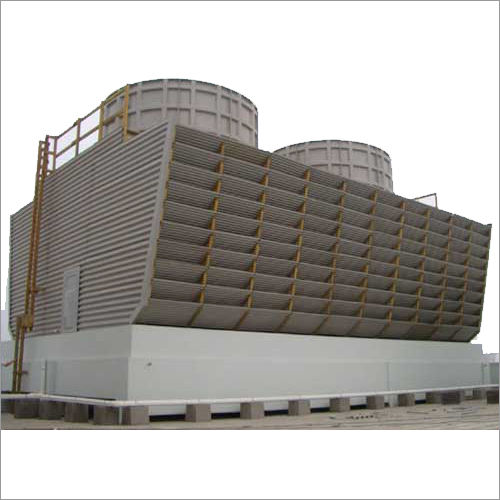

Price:
- 50
- 100
- 200
- 250
- 500
- 1000+

More Products in Cooling Towers Category
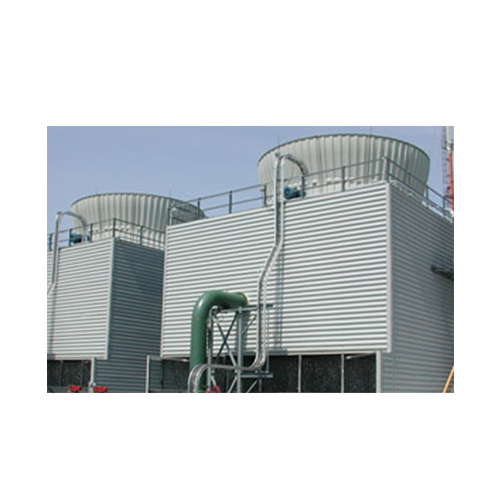
Forced Draft Cooling Tower
Minimum Order Quantity : 1 Unit
Material : Other , FRP (Fibre Reinforced Plastic)
Voltage : 440 V
Application : Industrial Cooling
FRP Pultruded Cooling Tower
Price 50000 INR / Unit
Minimum Order Quantity : 1 Unit
Material : Metal
Voltage : 220 Volt (v)
Application : Industrial
Product Type : FRP Pultruded cooling tower

FRP Plutruded Counter Flow Cooling Tower
Price 100000 INR / Set
Minimum Order Quantity : 1 Unit
Material : Other , FRP
Voltage : 220480 Volt (v)
Application : Industrial
Product Type : Cooling Tower

Industrial Cooling Tower
Price 50000 INR / Unit
Minimum Order Quantity : 1 Unit
Material : Metal
Voltage : 220480 Volt (v)
Application : Industrial
Product Type : Industrial Cooling Tower

GST : 24AADFM1173B1ZX


 Send Inquiry
 Send Inquiry
 Send SMS
 Call Me Free
Developed and Managed by Infocom Network Private Limited.

