


Call us now
08037103723

 Send Inquiry
Industrial Cooling Tower
Price 50000 INR/ Unit
Industrial Cooling Tower Specification
- Application
- Industrial
- Material
- Metal
- Condition
- New
- Height
- 60 Millimeter (mm)
- Product Type
- Industrial Cooling Tower
- Voltage
- 220-480 Volt (v)
- Weight
- 500 Kilograms (kg)
- Color
- White
- Length
- 120 Foot (ft)
Industrial Cooling Tower Trade Information
- Minimum Order Quantity
- 1 Unit
- Payment Terms
- Cash in Advance (CID), Cash Advance (CA), Cheque
- Supply Ability
- 1 Unit Per Month
- Delivery Time
- 3-4 Week
- Main Domestic Market
- Gujarat
About Industrial Cooling Tower
A large-scale heat exchange device called an industrial cooling tower is used to remove extra heat from industrial machinery or operations. In order to maintain ideal working conditions and prevent equipment overheating, these towers are made to dissipate heat by transferring it to the surrounding air through evaporation or convection.
The following are the main characteristics and elements of an industrial cooling tower:
1. Structure of the tower: Industrial cooling towers are often substantial buildings built of FRP (Fibre Reinforced Plastic), concrete, or steel. The tower construction guarantees the cooling tower's stability and endurance while supporting a number of components.
2. Fill Media: To increase the surface area available for heat exchange, cooling towers use fill media. The fill medium, which is frequently constructed of PVC, plastic, or wood, encourages interaction between the hot water and the air, improving cooling effectiveness.
3. Industrial cooling towers use strong fans or blowers to help the air move more easily through the tower. The airflow produced by the fans aids in the evaporation process and encourages heat dissipation.
4. Water Distribution System: To distribute water equally throughout the fill media, a water distribution system made of pipes, nozzles, and sprayers is employed. By ensuring enough soaking and maximal water-air interaction, this maximises cooling effectiveness.
5. Drift Eliminators: To reduce water loss through entrainment, drift eliminators are used in cooling towers. They aid in the tower's ability to contain water droplets, preventing their egress through the exhaust air.
6. Pumps, valves, motors, and control systems are just a few examples of the mechanical equipment that is frequently found in industrial cooling towers. Water circulation, temperature regulation, and overall operational management are handled by these parts.
Industrial cooling towers have the following benefits:
1. Effective Heat Dissipation: Industrial cooling towers' size and construction allow for effective heat dissipation, which enables industrial processes to run within ideal temperature ranges.
2. Scalability: Industrial cooling towers are excellent for a variety of industrial applications because they may be built and set up to handle huge heat loads.
3. Durability and longevity are ensured by the sturdy building materials used in industrial cooling towers, which also provide resistance to UV radiation, chemicals, and extreme weather conditions.
4. Customization: To ensure optimum performance and efficiency, industrial cooling towers can be tailored to meet individual needs, including size, capacity, and operational circumstances.
Industries include power production, oil and gas, chemical processing, manufacturing, and HVAC systems frequently use industrial cooling towers. They are essential for sustaining safe and effective operations, avoiding equipment overheating, and maximising energy usage.
Superior Industrial Cooling Solution
Our industrial cooling tower promises outstanding thermal performance and durability for diverse industrial processes. Precision-engineered and built with premium metal, the tower withstands demanding operational conditions, ensuring efficient cooling for factories, plants, and large facilities.
Reliable Manufacturing and Service
As a reputable manufacturer, service provider, and supplier based in India, we offer a comprehensive support system for our cooling towers. From production to on-site maintenance, our skilled team ensures every tower operates at peak efficiency, delivering long-lasting value.
FAQ's of Industrial Cooling Tower:
Q: How does this industrial cooling tower improve process efficiency?
A: The cooling tower dissipates excess heat from industrial processes, ensuring machinery and systems operate at optimal temperatures. This prevents overheating, reduces energy consumption, and boosts overall operational efficiency.Q: What industries commonly use this cooling tower?
A: This cooling tower is widely utilized in power plants, manufacturing factories, chemical processing units, and other industrial applications where efficient heat removal is essential.Q: When should the cooling tower undergo routine maintenance?
A: Routine maintenance should be scheduled quarterly or as recommended by the manufacturer, based on operating intensity. Regular checks extend the unit's lifespan and maintain its efficiency.Q: Where is this cooling tower manufactured and supplied from?
A: The cooling tower is manufactured, supplied, and serviced by us in India, ensuring prompt support and product availability across the country.Q: What is the installation process for this cooling tower?
A: Installation involves site inspection, foundation preparation, assembly of components, and electrical connection using the specified voltage range (220-480V). Our service team offers detailed guidance and on-site installation support.Q: How is the cooling tower used in industrial settings?
A: In industrial settings, the tower is integrated into the plant's cooling system where it channels heated water or air for efficient thermal management, maintaining continuous operation of critical equipment.Q: What are the main benefits of using your industrial cooling tower?
A: Using our cooling tower provides excellent heat dissipation, robust build quality, reliable performance, and efficient operation, leading to reduced downtime and lower maintenance costs for industrial clients.

Price:
- 50
- 100
- 200
- 250
- 500
- 1000+

More Products in Cooling Towers Category
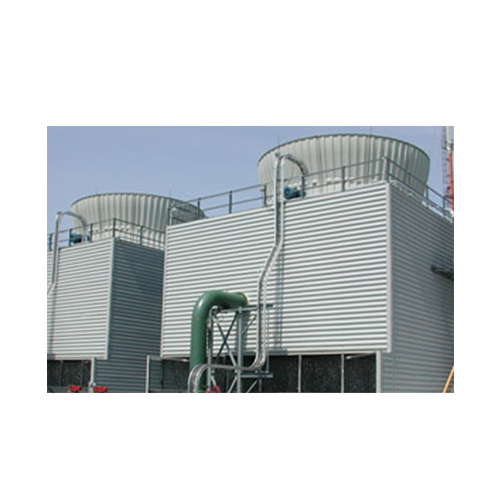
Forced Draft Cooling Tower
Minimum Order Quantity : 1 Unit
Material : Other , FRP (Fibre Reinforced Plastic)
Voltage : 440 V
Application : Industrial Cooling

FRP Plutruded Counter Flow Cooling Tower
Price 100000 INR / Set
Minimum Order Quantity : 1 Unit
Material : Other , FRP
Voltage : 220480 Volt (v)
Application : Industrial
Height : 60 Millimeter (mm)
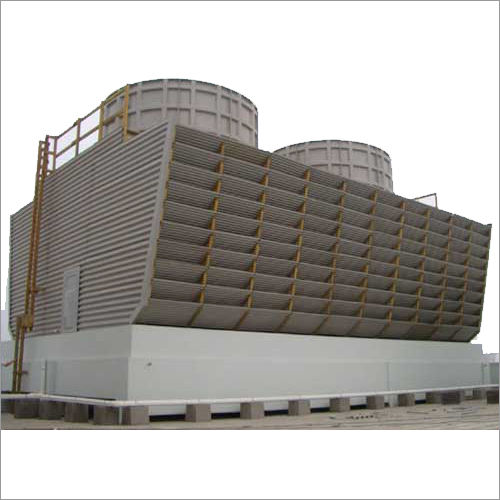
Timber Cooling Tower
Price 50000 INR / Unit
Minimum Order Quantity : 1 Unit
Material : Metal
Voltage : 220480 Volt (v)
Application : Industrial
Height : 60 Millimeter (mm)
FRP Pultruded Cooling Tower
Price 50000 INR / Unit
Minimum Order Quantity : 1 Unit
Material : Metal
Voltage : 220 Volt (v)
Application : Industrial
Height : 60 Millimeter (mm)

GST : 24AADFM1173B1ZX


 Send Inquiry
 Send Inquiry
 Send SMS
Developed and Managed by Infocom Network Private Limited.

