


Call us now
08037103723

 Send Inquiry
Cooling Tower FRP Pultruded Structure
Cooling Tower FRP Pultruded Structure Specification
- Air Flow
- 7000 to 80000 CFM (Varies with model)
- Application
- Industrial Cooling, HVAC, Process Cooling
- Motor
- Flange-Mounted, TEFC, IP55
- Material
- FRP (Fibre Reinforced Plastic) - Pultruded Structure
- Condition
- New
- Type
- Induced Draft, Counter Flow or Cross Flow
- Dimension (L*W*H)
- Customizable as per requirements
- Power Supply
- 3 Phase, 50/60 Hz
- Voltage
- 380V / 415V (As required)
- Cooling Type
- Water Cooled
- Nozzle Material
- ABS / Polypropylene
- Water Flowing Rate
- 35 to 650 m3/hr (Model dependent)
- Water Pump Motor
- Available as per system configuration
- Noise Control
- Low Noise FRP Fans and Acoustic Enclosure
- Assembly
- Modular, easy-to-install, pre-fabricated parts
- Service Life
- Designed for long operational life with minimal maintenance
- Thermal Efficiency
- High efficiency design for optimum heat rejection
- Water Distribution System
- Non-clogging polypropylene distribution nozzle
- Surface Finish
- UV resistant, colour pigmented gelcoat finish
- Drift Eliminator
- PVC / FRP drift eliminators to control water loss
- Temperature Range
- Up to 60C inlet water temperature
- Access Platform
- Integral FRP walkway/platforms for maintenance
- Fan Type
- Dynamically balanced axial flow fan
- Color
- Sky Blue / Custom color available
- Corrosion Resistance
- High resistance to chemicals, corrosion, and UV rays
- Fill Media
- PVC / PP film or splash fills as per process
- Frame Structure
- Pultruded FRP sections joined by SS/HDG fasteners and brackets
- Basin Type
- Leak-proof FRP water collection sump
Cooling Tower FRP Pultruded Structure Trade Information
- Minimum Order Quantity
- 1 Unit
- Payment Terms
- Cash in Advance (CID)
- Supply Ability
- 10 Units Per Month
- Delivery Time
- 30 Days
- Main Domestic Market
- Gujarat
About Cooling Tower FRP Pultruded Structure
A cooling tower system that uses a primary framework and structural elements made of pultruded FRP (Fibre Reinforced Plastic) materials is referred to as having a FRP pultruded structure. FRP pultruded structures have a number of benefits for cooling tower applications because of their durability, strength, and corrosion resistance.
The main characteristics and advantages of a FRP pultruded structure in a cooling tower are listed below:
1. Columns, beams, supports, and panels that make up the cooling tower's primary framework and structural components, such as pultruded FRP profiles, are used. These profiles are made using the pultrusion method, in which thermosetting resin is infused into continuous fibres (usually fibreglass) and the fibres are dragged through a heated die to make the required shape. The resulting FRP profiles are extremely strong and long-lasting while being lightweight.
2. FRP materials are naturally resistant to corrosion caused by exposure to moisture, chemicals, and environmental factors. They are therefore perfect for cooling tower applications where there is water and a variety of chemicals. FRP doesn't rust or corrode over time like traditional materials like steel or concrete, thus it has a longer service life and requires less maintenance.
3. High Strength-to-Weight Ratio and Lightweight: FRP pultruded profiles have outstanding strength-to-weight ratios, making them strong but light. As a result, installation is made simpler, the structural strain on the building or support structure is decreased, and construction costs could possibly be lower.
4. Flexibility in design: Customising pultruded FRP profiles to fit particular cooling tower requirements is simple. They can be customised to fit various shapes, sizes, and load capabilities, giving designers more design freedom. This adaptability makes it easier to integrate drift eliminators, fans, fill media, and water distribution systems into cooling towers.
5. Durability and low maintenance: Because FRP pultruded structures are resistant to corrosion and deterioration, they have extended service lives. Compared to materials like steel or concrete, they require less maintenance, which lowers costs and minimises downtime.
6. Thermal Insulation: The intrinsic thermal insulating qualities of FRP materials are apparent. They contribute to improving energy efficiency and operating performance by reducing the cooling tower's exposure to temperature variations outside.
Various industries, including power stations, refineries, chemical processing plants, HVAC systems, and manufacturing facilities, use FRP pultruded structures in cooling towers. They offer dependable and long-lasting options for heat dissipation, lowering maintenance requirements, and improving overall cooling tower efficiency.
Exceptional Durability in Harsh Environments
Engineered with pultruded FRP and secured by stainless steel or HDG fasteners, our structure resists chemicals, corrosion, and UV rays, ensuring performance even in the toughest industrial conditions. The UV-resistant gelcoat finish maintains both aesthetics and integrity, making this cooling tower ideal for demanding sites.
User-Friendly Modular Design
The cooling tower's modular, pre-fabricated sections allow for rapid assembly and flexible installation. Integrated FRP walkways and platforms facilitate convenient access for inspection and maintenance, minimizing downtime and labor demands.
High Efficiency and Customization Options
Optimize cooling with high-efficiency fill media, dynamically balanced axial fans, and a non-clogging polypropylene nozzle system. Available in sky blue or custom colors, dimensions and airflow rates adapt to your process requirements, assuring peak performance in every installation.
FAQ's of Cooling Tower FRP Pultruded Structure:
Q: How is the Cooling Tower FRP Pultruded Structure assembled on-site?
A: The structure comes as modular, pre-fabricated FRP sections that are quickly assembled on-site using stainless steel or hot-dip galvanized fasteners and brackets, enabling swift installation and reduced labor time.Q: What materials are used to ensure corrosion and chemical resistance?
A: Pultruded FRP sections combined with UV-resistant gelcoat, PVC or PP fill media, and stainless steel or HDG fasteners deliver high resistance against chemicals, corrosion, and UV exposure for prolonged operational life.Q: Where is this cooling tower structure commonly used?
A: It is extensively applied in industrial cooling, HVAC, and process cooling settings, catering to both manufacturing plants and commercial facilities across India and beyond.Q: What is the maximum water temperature the system can handle?
A: The cooling tower is engineered to withstand inlet water temperatures up to 60C, accommodating a broad range of industrial processes.Q: How does the water distribution system maintain efficiency?
A: The use of non-clogging polypropylene distribution nozzles ensures uniform water spread over the fill media, promoting efficient thermal exchange and preventing blockages during operation.Q: What are the main benefits of choosing FRP pultruded structures for cooling towers?
A: FRP pultruded constructions offer lightweight durability, superior corrosion resistance, minimal maintenance needs, and customizable options, making them a cost-effective and long-lasting choice for cooling needs.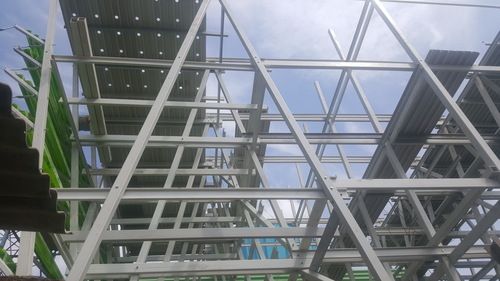

Price:
- 50
- 100
- 200
- 250
- 500
- 1000+

More Products in Cooling Tower Spares Category
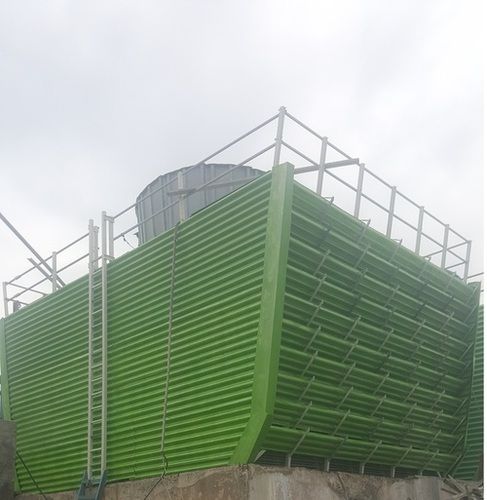
Cooling Tower Casing
Minimum Order Quantity : 1 Unit
Material : Other , FRP (Fibre Reinforced Plastic)
Voltage : 380440V
Application : Industrial Cooling, HVAC, Power Plants, Processing Plants
Condition : New
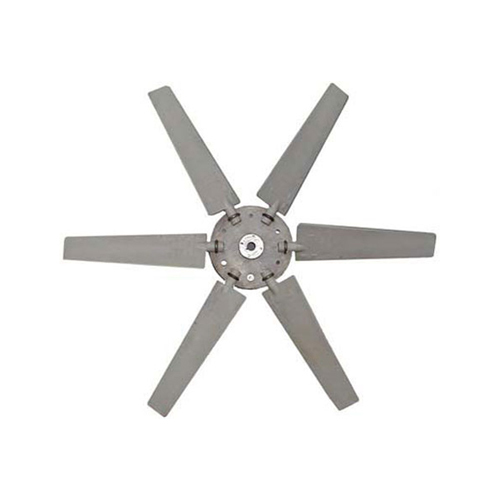
Cooling Tower Fan Assembly
Minimum Order Quantity : 1 Unit
Material : Other , Aluminium Alloy/FRP
Voltage : 415 V
Application : Industrial Cooling Towers
Condition : New
Energy Fan
Price 50000 INR / Unit
Minimum Order Quantity : 1 Unit
Material : Metal
Voltage : 220480 Volt (v)
Application : Industrial
Condition : New

Fan Cylinder
Price 50000 INR / Unit
Minimum Order Quantity : 1 Unit
Material : Metal
Voltage : 220480 Volt (v)
Application : Industrial\
Condition : New

GST : 24AADFM1173B1ZX


 Send Inquiry
 Send Inquiry
 Send SMS
 Call Me Free
Developed and Managed by Infocom Network Private Limited.

